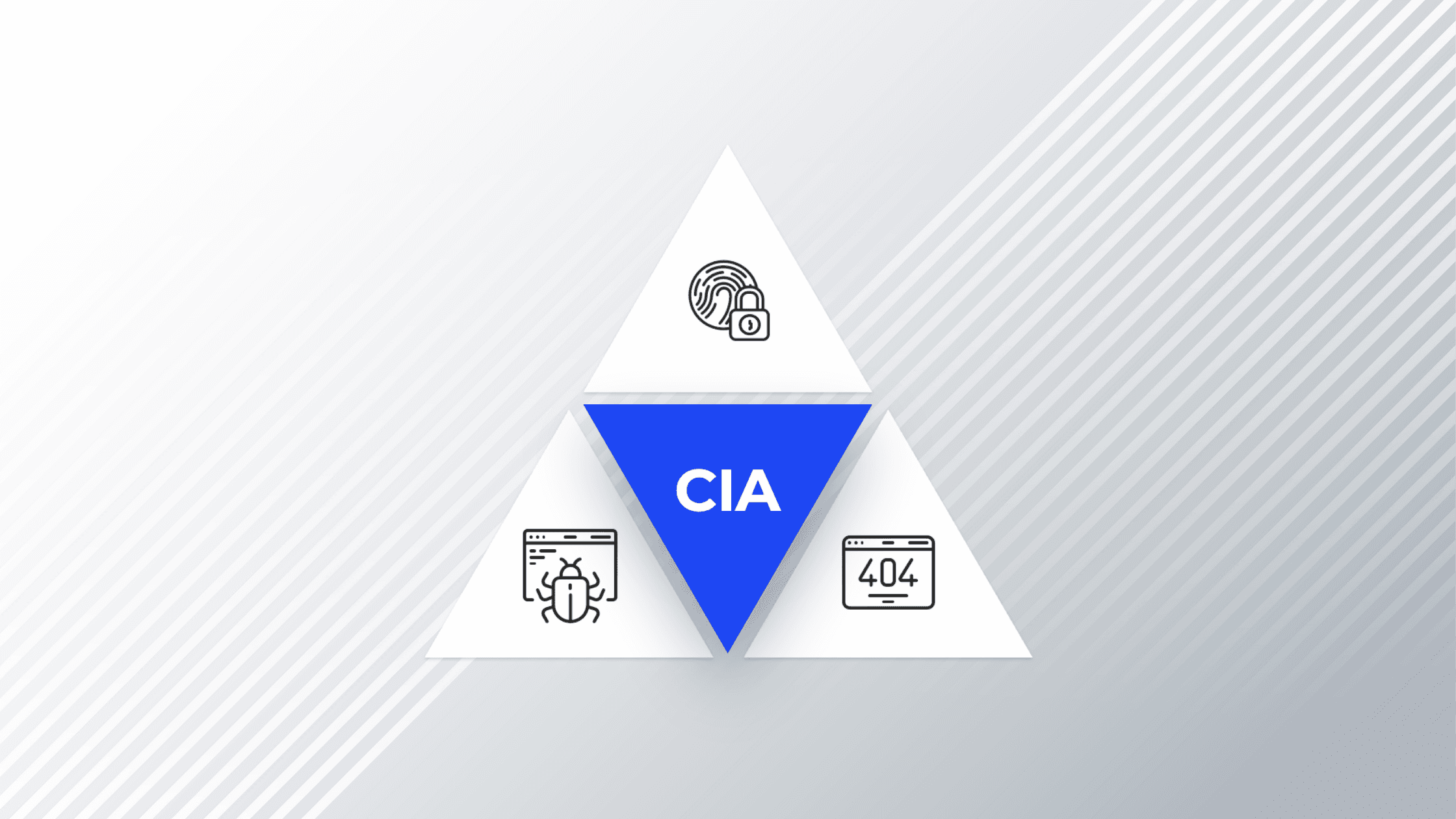

Information security protects what organizations depend on most: their information. Before anyone can implement ISO/IEC 27001 or pass an audit, they need to understand what they are actually protecting and why. This article covers the two foundations everything else rests on — information as an asset, and the CIA triad of Confidentiality, Integrity, and Availability.
It is written for anyone new to the field, using plain explanations and concrete examples. Master these ideas and the rest of the standard becomes far easier to follow — because every clause and every control ultimately traces back to them.
Information as an Asset
Information is one of the most valuable resources an organization holds. It drives decisions, strategy, and innovation, which is why it is so often a target. That value is exactly what makes it an asset worth protecting.
Information exists in three forms, each needing a different kind of protection:

Digital: Data on computers, servers, cloud platforms, or mobile devices — customer records, financial reports, source code. Easy to share, but exposed to cyberattacks, so it relies on measures like encryption, access controls, and backups.
Physical: Printed documents, handwritten notes, paper files such as signed contracts or personnel records. These need physical safeguards — locked cabinets, secure rooms, controlled office access.
Knowledge: Expertise held in people’s heads — trade secrets, operational know-how, undocumented processes. This walks out the door when an employee leaves, which is why documentation and knowledge-sharing matter.
ISO/IEC 27001 starts from the premise that you cannot protect what you have not identified. Cataloguing these assets is the groundwork for everything that follows.
Why Information Needs Protection
The scale of the threat is hard to overstate. Cybersecurity Ventures estimates global cybercrime cost the world around $10.5 trillion in 2025 — a figure that, treated as a national economy, would rank among the largest in the world — and projects continued growth toward $12.2 trillion annually by 2031. At the same time, ISC2’s workforce research points to roughly 4.8 million unfilled cybersecurity roles globally, leaving many organizations short of the people they need to defend themselves.
Behind those numbers are concrete consequences that effective security is meant to prevent:
Data breaches: Unauthorized access to sensitive data such as customer information or intellectual property.
Service disruption: Outages to critical systems — e-commerce, cloud services, payment processing — that halt operations.
Regulatory penalties: Fines for non-compliance with laws like the GDPR, CCPA, or HIPAA.
Reputational damage: Lost customer and partner trust after an incident, often costing more than the breach itself.
ISO/IEC 27001:2022 gives organizations a structured way to manage these risks through an Information Security Management System (ISMS). The right controls reduce the likelihood and impact of incidents while demonstrating to customers and regulators that security is taken seriously.
The CIA Triad: The Core of Information Security
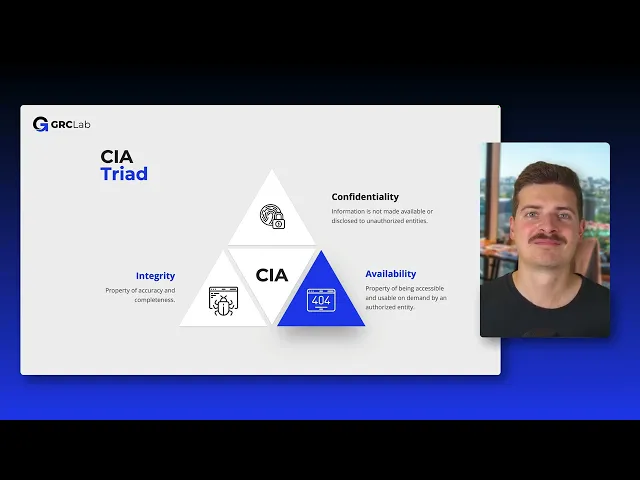
As defined in ISO/IEC 27000, information security means preserving the confidentiality, integrity, and availability of information — the CIA triad. These three principles are the foundation of any ISMS and guide which ISO 27001 controls you select. Here is each one, with an everyday example.

Confidentiality
Definition: Information is accessible only to those authorized to have it.
Example: Alice, a project manager, emails a confidential plan to her team lead, Bob. If an attacker intercepts and reads it in transit, confidentiality is breached. Email encryption or a secure file-sharing tool prevents that.
Why it matters: It protects sensitive data — personal information, financial records, trade secrets — from anyone who should not see it.
Integrity
Definition: Information stays accurate and complete, and is not altered without authorization.
Example: Alice sends Bob a contract through a shared platform. If an attacker changes the terms before Bob opens it, integrity is compromised — and decisions get made on false information. Digital signatures or hashing confirm the document is unchanged.
Why it matters: Decisions are only as good as the data behind them. Integrity is what makes financial reports and records trustworthy.
Availability
Definition: Information and systems are accessible to authorized users whenever they are needed.
Example: Alice and Bob rely on the company payroll system to pay staff. If ransomware locks it, availability is lost and payroll stalls. Regular backups and redundant systems keep it accessible.
Why it matters: A perfectly confidential system nobody can reach is useless. Availability keeps the business running.
The CIA triad underpins ISO 27001’s Annex A controls. Control A.8.24 (Use of Cryptography), for instance, supports confidentiality, while A.8.13 (Information Backup) protects availability. Every control exists to defend one or more of these three properties.
Why This Matters More Than Ever
AI has changed the landscape on both sides. Attackers use it to scale phishing and craft more convincing intrusions, while defenders increasingly rely on AI tools to draft policies, generate risk registers, and assemble documentation. That raises an uncomfortable question for anyone in the field: if a model can produce the paperwork, what makes a security professional valuable?
The answer is judgment. A tool can generate a confidentiality control; it cannot tell you whether that control is right for your organization, defend the decision to an auditor, or recognize when its own output is subtly wrong. That judgment rests on genuinely understanding the fundamentals — which is precisely what this guide is built to give you.
Where to Go Next
You now have the two foundations: information as an asset, and the CIA triad that defines what security means. The next concept to understand is the framework ISO 27001 uses to manage all of this in a structured, repeatable way — the management system. Continue with What is a Management System? to see how these principles become an operating structure, then move on to Understanding ISO 27001 for the standard itself.